Follow us:

Our History

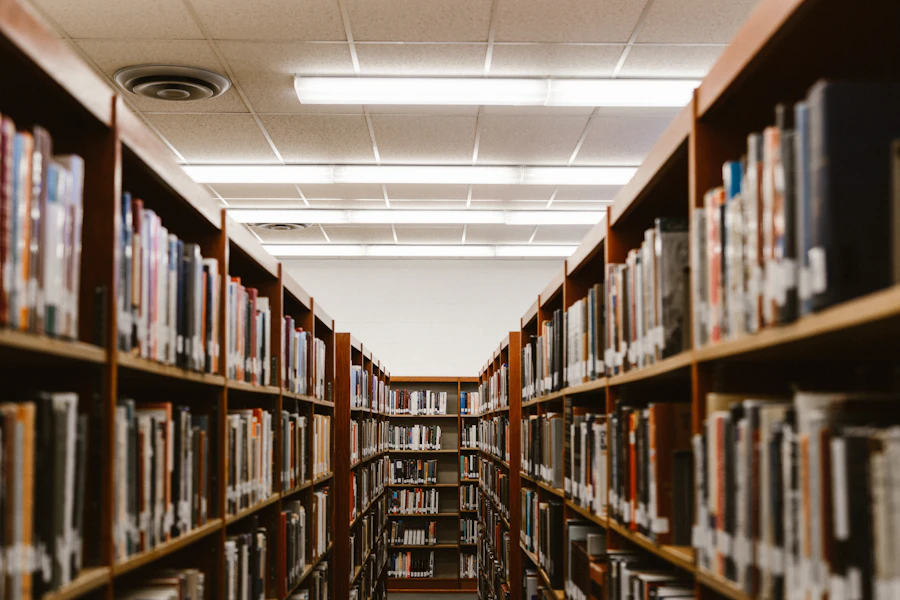
The college library, a legacy of the founding years
How It Began

Three Rooms, Four Teachers, One Conviction

In the summer of 1969, a group of Jagadhri traders, schoolteachers and retired government officers met in the courtyard of the Agrasen Dharamshala with a single agenda: the town's children were finishing school and stopping there, because the nearest degree college was a two-hour bus journey away.

Within fourteen months they had registered the Maharaja Agrasen Educational Society, purchased four acres on Radaur Road, and opened admissions for a B.A. programme with three rooms, four teachers and sixty-two students. The first principal took a salary of ₹600 a month and taught History himself.

The college has never had a wealthy patron. Every building on this campus was funded by local contribution, government grant or student fees — which is precisely why the Governing Body has resisted raising tuition beyond inflation for five decades.
Our Journey

Five Decades, Milestone by Milestone

1971
The College Opens

Maharaja Agrasen College begins with a B.A. programme, 62 students and four teachers in three rented rooms on Radaur Road.

1974
Affiliation Granted

Kurukshetra University grants provisional affiliation. The first batch of 58 graduates receives degrees at the university convocation.

1979
Science Stream Introduced

B.Sc. Medical and Non-Medical launched with the construction of the first Physics and Chemistry laboratories, funded by a UGC development grant.

1984
Commerce Block & Co-Education

B.Com. begins and the college formally becomes co-educational. Women make up 11% of the first mixed cohort.

1992
Agrasen Utsav Founded

The annual inter-college cultural festival is held for the first time, drawing participants from nine colleges across Ambala and Karnal divisions.

1998
Postgraduate Departments

M.A. in English and Political Science introduced, followed by M.Com. two years later. The central library crosses 15,000 volumes.

2004
Computer Centre & BCA

The first computer laboratory opens with 30 systems, and BCA is introduced as the college's first self-financing professional programme.

2011
NAAC Accreditation

The college clears its first NAAC accreditation cycle and establishes the Internal Quality Assurance Cell alongside a formal grievance mechanism.

2016
Girls' Hostel & Auditorium

A 120-bed girls' hostel and the 400-seat Maharaja Agrasen Auditorium are inaugurated, funded jointly by RUSA and local contribution.

2020
Fifty Years & a Pandemic

The golden jubilee is marked online. The entire teaching operation moves to digital delivery within six weeks, and 2,900 students are onboarded.

2023
NEP 2020 Rollout

The four-year undergraduate programme with multiple exit options is implemented, and six skill-enhancement certificate courses launch.

2026
Where We Stand Today

24 programmes, 4,200 students, 98 faculty, a 60 kW solar plant and a placement conversion rate that has more than doubled in five years.

With Gratitude

The People Who Built This College

Names that appear on no building, but without whom there would be no college to name.

Founder portrait
Lala Ram Kishan Das
Founder President, 1969–1988

Donated the original four acres and chaired the Society for nineteen unpaid years.

First principal portrait
Prof. Shyam Sunder Vats
First Principal, 1971–1985

Taught History while running the institution, and personally admitted the first 62 students.

Founder member portrait
Smt. Kamla Devi Goyal
Founder Member, 1969–1997

Campaigned door to door in Jagadhri for girls' admission when the college went co-educational.

Founder member portrait
Sh. Bansi Lal Jindal
Treasurer, 1969–1994

Kept the accounts by hand for 25 years and never claimed a single rupee in expenses.

Then & Now

Glimpses From the Archive

Are You One of Our 40,000 Alumni?

Register with the Alumni Association to mentor a current student, speak at a departmental seminar or simply stay in touch.